



I approached DramaTV: Reel & Drama Shorts as the kind of entertainment app you open when you want a story immediately, not when you have time to choose a full-length series and settle in for an hour. My overall impression is clear: it is most appealing as a quick, low-commitment way to sample short dramas, especially during small gaps in the day. It is not a replacement for a complete streaming service, but it can fit neatly between those two extremes of “I want something to watch” and “I do not want to invest much time.”
The app sits in the Entertainment category and comes from APANDA TRAVEL CO.,LTD. It is free to install, rated for Everyone, and has reached over five million installs. Those figures suggest that the short-drama format has found a sizeable audience, but popularity alone does not make every viewing session satisfying. What matters here is how well the app handles quick discovery, repeated short viewing, and the expectations that come with watching stories in a reel-style format.
Why the short-drama format works well here
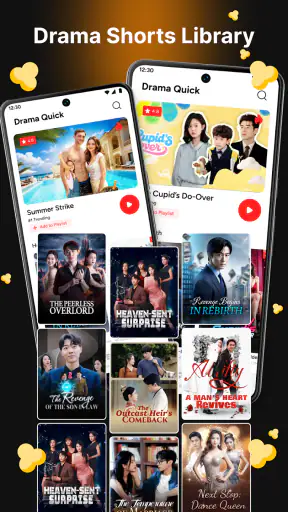
The strongest idea behind DramaTV is its focus. Instead of asking me to browse an enormous library of conventional films and television episodes, it is built around drama shorts and short drama content. That narrower purpose makes the app easy to understand from the first launch: I am there for brief narrative entertainment, and the interface concept is designed around moving from one compact story moment to another.
This is useful in situations where a traditional streaming app feels excessive. I can imagine opening it while waiting for an appointment, taking a short break between tasks, or relaxing before bed without wanting to begin a long episode. A short-drama app also suits viewers who enjoy emotional hooks, quick conflicts, and frequent turning points. The format encourages immediate engagement because each piece has less time to lose before something needs to happen.
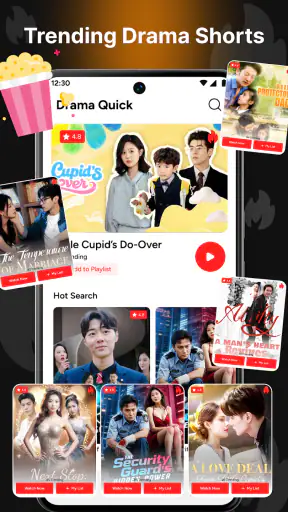
The reel-style presentation is another practical strength. It reduces the effort involved in choosing what to watch next. Rather than spending several minutes reading descriptions, comparing runtimes, and searching through categories, I can move through short-form material with a lighter decision-making burden. That does not mean every clip will match my taste, but the cost of trying one is lower than committing to a full program.
I also found the format useful for testing whether I actually want more of a particular type of drama. A short scene can reveal the tone, pacing, and emotional style quickly. If it works for me, I can continue exploring that kind of content. If it does not, I have lost very little time. This makes the app more approachable than a service where every choice feels like a major viewing decision.
A good companion for fragmented free time
The most realistic use case is not a dedicated movie night. It is the collection of spare minutes that usually disappear into aimless scrolling. For example, after finishing lunch, I might have enough time for a few short dramatic scenes but not enough attention for a full episode. DramaTV gives that interval a clearer purpose. I can watch a little, stop, and return later without treating the experience like a major event.
That convenience comes with an important trade-off. Short drama is designed to keep momentum high, so it may feel more direct and less patient than a carefully paced television series. I would not choose it when I want layered world-building, quiet character development, or a story that takes its time. I would choose it when I want a quick emotional lift, a surprising turn, or something easy to sample.
The distinction matters because many people download entertainment apps expecting one universal replacement for every other viewing option. This one has a more specific role. It is closer to a pocket-sized stream of compact drama than a complete home for long-form television. Once I understood that, its appeal became much easier to judge fairly.
What the audience size tells me—and what it does not
The app has an average rating of 3.7 from around twenty thousand ratings, alongside ninety-five written reviews. I read that as a mixed but meaningful signal. There is enough activity to show that people are using it, yet the rating is not so high that I would expect a flawless experience for every viewer. In practical terms, I would install it with reasonable expectations rather than assuming that every short will be polished or every recommendation will suit me.
The difference between a broad rating count and a much smaller number of written reviews is also worth keeping in mind. A score can indicate general satisfaction, but it does not explain whether users are reacting to the story selection, the viewing flow, technical behavior, or the limits of short-form drama itself. I would therefore spend a little time trying the app personally before deciding whether it deserves a permanent place on my phone.
Its current version is 1.0.4, and the minimum operating-system requirement is Android 10 or later. For someone with a reasonably current Android device, that requirement should be straightforward. For an older phone, the operating-system version is the first practical check before downloading. I would rather confirm compatibility at the start than plan a viewing session and discover that the device cannot run the app.
Where the experience is strongest in everyday use
DramaTV’s biggest advantage is the way it lowers the barrier between opening an app and seeing something dramatic. The concept does not depend on a long setup process or a complicated viewing plan. That makes it approachable for casual viewers who want entertainment without learning a large platform.
I especially like the idea of using it as a discovery tool. Short content can act as a quick filter for mood. If I want something emotionally intense, romantic, suspenseful, or simply different from the usual social feed, I can try a few pieces and see what holds my attention. The app’s value is not only in finishing individual shorts; it is also in helping me decide what kind of story I want at that moment.
There is a subtle advantage for people who struggle with choice overload. Large streaming catalogs often present so many options that selecting one becomes the main activity. A reel-oriented drama experience changes that rhythm. The next item is presented more immediately, which can make casual viewing feel less like research. For a user who wants to relax rather than curate a watchlist, that simplicity is genuinely useful.
Another strength is portability of attention. I do not need to reserve a long uninterrupted block for the app to make sense. A short viewing session can still feel complete enough to be worthwhile. That makes it suitable for commutes, waiting rooms, short breaks, or the final minutes before sleep, although I would avoid watching when I need to stay focused on something else.
Three practical ways I would use it
- Use it as a mood sampler: I would try a few short dramas before committing to a longer series elsewhere. This helps me identify whether I want romance, tension, melodrama, or a lighter change of pace.
- Use it between fixed activities: A short gap before a meeting or appointment is less frustrating when I have something with a natural stopping point. I would avoid starting a long program simply because I have a few spare minutes.
- Use it as a screen-time boundary: I would decide in advance how many short pieces I want to watch. The reel format makes it easy to continue, so setting a stopping point helps prevent a brief break from becoming an unplanned marathon.
That last point is important. Short-form entertainment can feel harmless because each individual item is brief, but the next piece is always tempting. I found the format most enjoyable when I treated it as a deliberate break rather than an endless background feed. The app makes starting easy; managing the session is still my responsibility.
How it compares with familiar alternatives
Compared with a conventional streaming service, DramaTV is quicker to enter and easier to sample, but less suited to sustained storytelling. A standard service is better when I want a full film, a complete episode, stronger control over what I select, or a more deliberate viewing experience. DramaTV is better when I want the story to come to me in compact portions.
Compared with general short-video platforms, its drama focus is more attractive when I want narrative rather than unrelated clips. A broad social feed may offer more variety, humor, news, and creator content, but it can also be noisier and less predictable. DramaTV’s narrower identity gives my viewing a clearer purpose. I open it for short drama instead of hoping the next item happens to be interesting.
Compared with free video platforms, the decision is more about organization than raw variety. A general video service may offer longer programs, independent uploads, tutorials, music, and live material. DramaTV is the more suitable choice when I specifically want a compact dramatic format and do not want to search through unrelated results.
In other words, I would not ask this app to beat every alternative at everything. Its best case is more focused: quick drama discovery with less commitment than long-form streaming and more narrative direction than a completely open-ended video feed.
The main weakness: convenience can come at the expense of depth
The same short structure that makes DramaTV accessible can also make it feel limited. Stories told in brief installments have less room for careful setup, subtle relationships, and gradual changes in character. If I prefer plots that breathe, I may find the rapid movement from hook to conflict to payoff too compressed.
This is not necessarily a flaw in the app’s execution; it is a limitation of the format it emphasizes. Still, it affects whether I would recommend it. Someone who loves detailed dramas may enjoy the immediacy but eventually want a conventional series afterward. Someone who watches mainly for atmosphere and character nuance may be more satisfied by a long-form service from the beginning.
The reel-style flow can also encourage passive viewing. Because the next short is easy to reach, I may keep watching without choosing intentionally. That is convenient when I am in the mood to browse, but less helpful when I want a specific title or a carefully ordered story. I would prefer a more deliberate viewing habit for anything I consider important, rather than relying entirely on whatever appears next.
Another point of friction is expectation management around quality. A catalog built around rapid, compact viewing may contain material that varies in tone and appeal from one item to another. The rating of 3.7 reflects that the overall experience is not universally loved. I would give the app a fair trial, but I would not assume that a single disappointing short represents everything available—or that one excellent short guarantees the rest will match it.
There is also a practical audience limitation created by the operating-system requirement. Android users on older software may not be able to use the current release, while newer devices meeting Android 10 or above are the natural target. That is not a problem for most current phones, but it matters for anyone keeping an older handset for basic entertainment.
Who should install it, and who should skip it
I would recommend DramaTV to viewers who enjoy short dramatic stories, prefer quick entertainment, and often watch in fragmented sessions. It is particularly well suited to someone who opens their phone several times a day and wants a more focused alternative to an unrestricted social feed. It also makes sense for people who like sampling new narrative styles without committing to a full season.
I would be more cautious recommending it to viewers who want deep catalog control, long episodes, careful pacing, or a single premium series to follow from beginning to end. If the main goal is watching acclaimed films, documentaries, live programming, or detailed television dramas, a conventional streaming platform is likely the better primary subscription or download.
Parents should still remember that an Everyone rating describes the app’s broad age suitability, not a personal guarantee that every dramatic theme will match every household’s preferences. I would preview the experience myself and decide whether the tone is appropriate for the people who may use the device. That is a sensible step with any entertainment app built around a changing stream of content.
For a first session, I would not judge it after watching only one item. I would try several short dramas in different moods, pay attention to how easily I can stop and resume, and see whether the reel-style discovery actually saves time. That small test tells me more than the install count or the store summary because it measures whether the format fits my own habits.
My final view after using the app
DramaTV succeeds when I treat it as a focused source of quick drama rather than a universal television replacement. Its free access, Everyone age rating, simple premise, and large install base make it easy to try, while the 3.7 average suggests I should approach it with balanced expectations. The app’s strongest quality is not depth; it is immediacy.
I would keep it available for short breaks, casual discovery, and moments when a full episode feels like too much work. I would not make it my only entertainment app, especially on evenings when I want a carefully chosen film or a story with room to develop. The short format can be engaging, but it naturally leaves less space for complexity.
My recommendation is specific: install it if you want drama in small, easy-to-start portions, but skip it if your priority is long-form storytelling and precise control over what you watch. For the right viewer, that distinction makes the app useful rather than disappointing. It gives spare minutes a narrative shape, and that is a worthwhile role even if it cannot replace the broader experience of a full streaming service.


